
Dinero, dinerito
¿Cuánto sabes sobre dinero en español ? Mide tus conocimientos económicos con este crucigrama. ¡Buena suerte ! [game-crossword id="1858″ ]

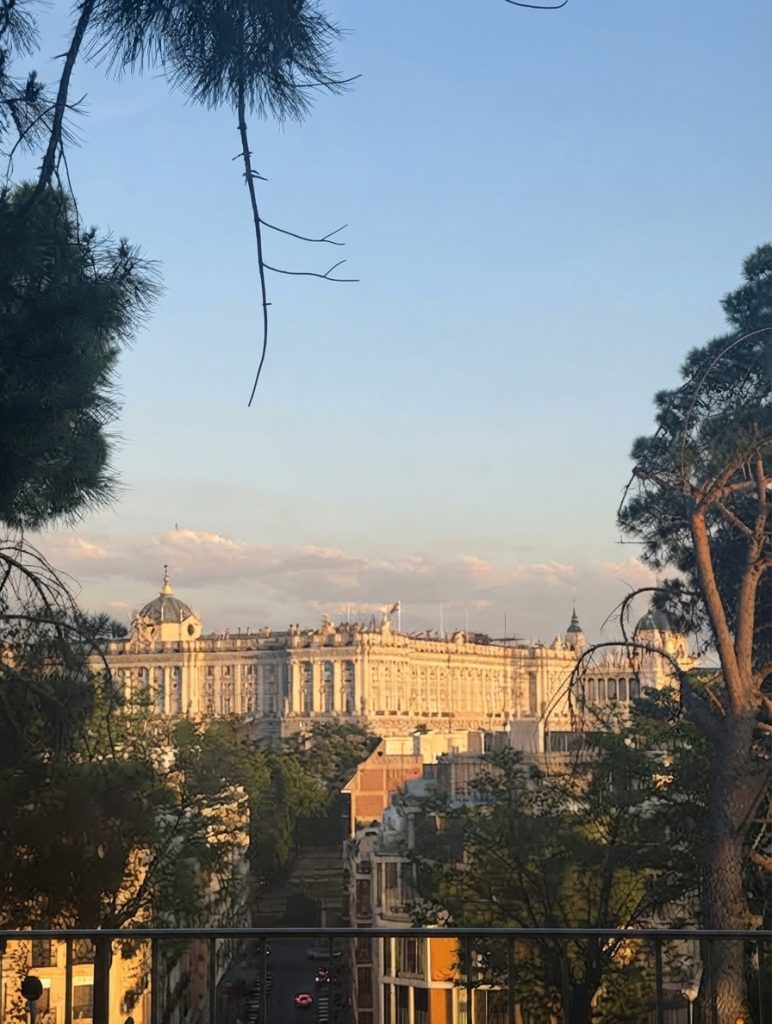
Moving to Spain’s capital as an international student comes with a massive bucket list. Like most newcomers, I immediately hit the classic spots: crammed into tapas bars in La Latina, hunted through the crowds at El Rastro flea market, admired masterpieces in the Prado Museum, and walked up and down Gran Vía. (Full disclosure: I still haven’t made it to the infamous 7-story nightclub, Teatro Kapital, but it’s on the list!).
Yet, while exploring the city outside of Spanish classes at Jaleo Madrid, I discovered incredible places that completely blew me away—and they aren’t the ones plastered across generic travel guides. If you want to experience the authentic side of the city, here are three secret spots you shouldn’t miss.
This place feels surreal because it’s an authentic ancient Egyptian temple sitting right in the middle of Madrid. Located on the west side of the city center near Plaza de España and Parque del Oeste, it was built in the 2nd century BC and given to Spain as a gift in the late 1960s to thank the country for helping save ancient monuments during the construction of the Aswan Dam.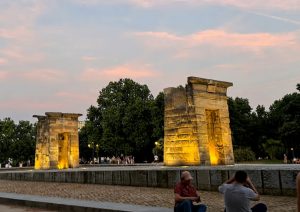
The Local Tip: Don’t just visit during daylight hours. Head over right before sunset. Because the park sits high up on the western edge of the city, it offers some of the best panoramic views of Madrid’s skyline. The sky turns incredible shades of orange and pink, and the floodlit temple mirrors perfectly in the surrounding reflecting pools. It’s completely free and a favorite gathering spot for locals and students to unwind.
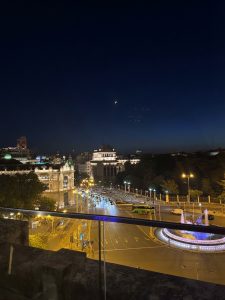
Almost every traveler snaps a photo of the outside of Palacio de Cibeles because it looks like a grand white fairy-tale castle. However, few visitors actually step inside, which is a major missed opportunity. Formerly Madrid’s central post office and telephone hub, it has been transformed into a massive cultural and civic space.
What to do inside:
Visit CentroCentro: Explore the building’s rotating modern art exhibits and historical photo archives documenting Madrid’s urban evolution.
Grab a rooftop drink at Azotea Cibeles: Head up to the 6th floor for an incredible bird’s-eye view looking straight down at the Cibeles Fountain and the start of Gran Vía. There is a small entry fee for the terrace, but it includes a voucher applicable toward your first drink.
While Madrid’s “Big Three” art museums—the Prado, the Reina Sofía, and the Thyssen—are world-famous for housing works by Velázquez, Goya, and Picasso, a quieter cultural experience awaits further north in the Chamberí neighborhood.
Le Musée Sorolla is dedicated to Joaquín Sorolla, a master painter from Valencia renowned for his impressionist works capturing brilliant Mediterranean light and coastal scenes.
Why it’s worth visiting: Rather than a sterile white gallery, the museum is housed in the artist’s remarkably preserved former home and studio, featuring his original furnishings and artwork. The highlight is the tranquil, Andalusian-style courtyard garden filled with lush greenery, shady trees, and cooling fountains. It is an ideal urban oasis to escape the afternoon bustle, proving that even non-art enthusiasts fall in love with the space.
¿Cuánto sabes sobre dinero en español ? Mide tus conocimientos económicos con este crucigrama. ¡Buena suerte ! [game-crossword id="1858″ ]

Hace unos años, el primer paso cuando se quería aprender un idioma era comprar un diccionario. En general, nuestras casas estaban llenas de diccionarios pequeños y de poca utilidad, como la mayoría de los métodos del tipo “aprende chino en 30 días”. Incluso, antes del smartphone, alguno de ellos viajaba en nuestra maleta con la esperanza de que alguien de ese país nos entendiese. La situación, desde luego, ha cambiado mucho. Sin embargo, la necesidad de resolver nuestras dudas en otro idioma sigue presente. Hoy os damos algunas pistas sobre cómo hacerlo. El contexto: La primera recomendación sobre el diccionario es que no lo uses. ¿Realmente necesitas saber esa palabra? ¿Seguro que no entiendes el contexto que lo rodea? En la mayoría de los casos, el diccionario se puede sustituir

Nichée au cœur de la péninsule ibérique, Madrid n'est pas seulement la capitale animée de l'Espagne, mais aussi l'un des centres de voyage les plus accessibles d'Europe. C'est le camp idéal pour les étudiants internationaux ; étudier l'espagnol à Madrid signifie que, tout en passant votre semaine à maîtriser la langue dans un cadre d'immersion chaleureux, vos week-ends peuvent être consacrés à l'exploration de pays entièrement nouveaux. Grâce à l'aéroport Adolfo Suárez Madrid-Barajas (MAD), les habitants et les visiteurs ont accès à des centaines de vols directs hebdomadaires. Si vous gardez un œil sur les offres de dernière minute des compagnies aériennes, une escapade spontanée et économique le week-end est toujours à portée de main. Si vous cherchez à déployer vos ailes le week-end prochain après vos cours de langue intensifs, voici quatre destinations internationales incroyables que vous pouvez atteindre en deux heures ou moins depuis Madrid. Week-end direct