
RTVE Play: Learn Spanish for Free with Spanish TV
RTVE Play, the free app from Spain’s public broadcaster, is one of our favourite tools for learning Spanish: news, classic series and films with subtitles.


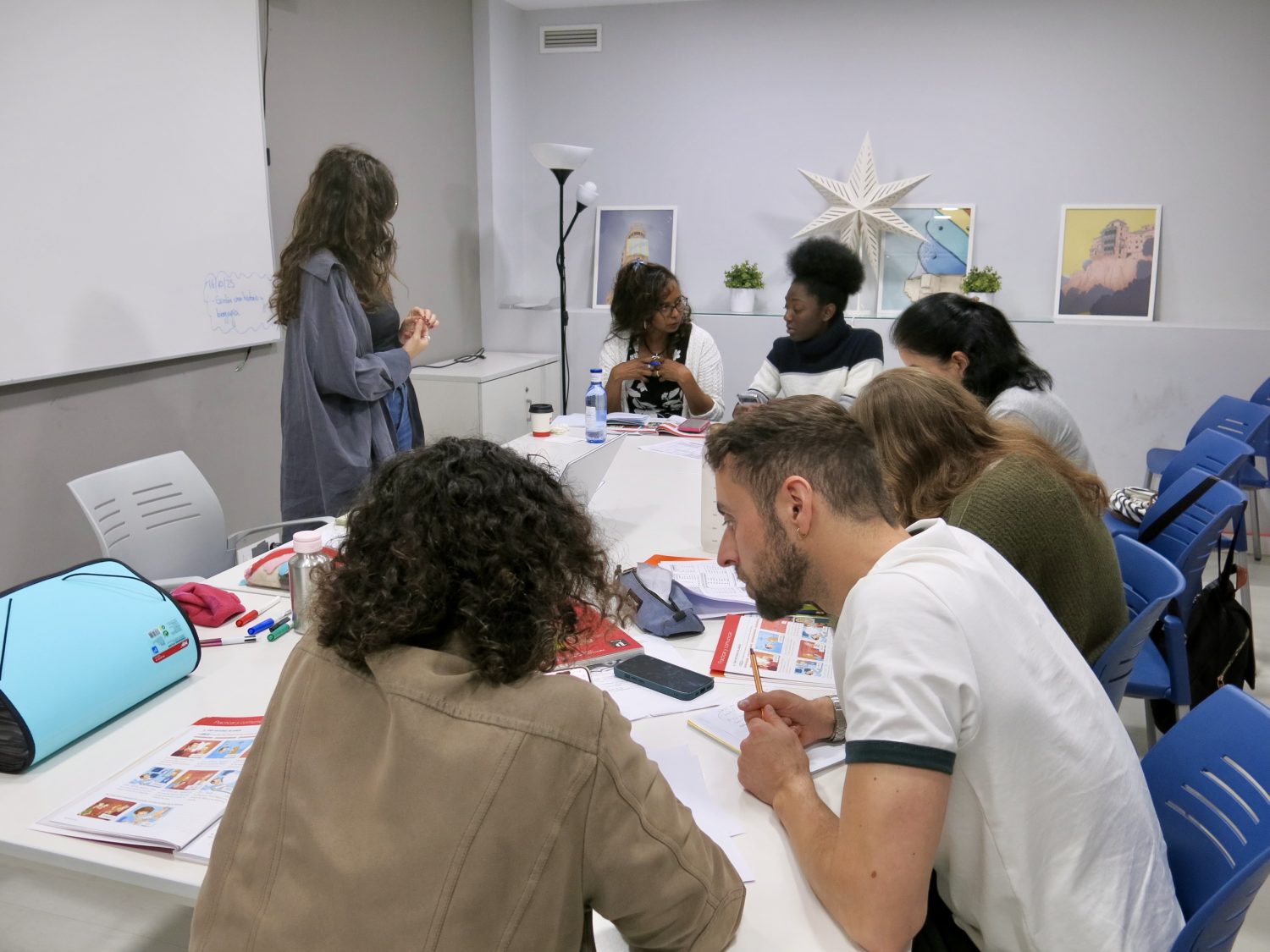
Learning Spanish has some wonderful moments: the first sentence that makes sense, your first conversation outside class, even your first dream in Spanish. But there are tougher moments too. In our experience as Spanish teachers, there are five big struggles you’ll meet along the way. Don’t worry: like most problems, they have solutions.
The first big battle. Words ending in “a” are feminine and words ending in “o” are masculine… always? Definitely not. And words ending in “e”? It depends. Why is “problema” masculine and “mano” feminine? Spanish classes are full of these questions.
Our tip: relax. Most of the language follows the “a” and “o” rule, and the exceptions usually follow a rule of their own. For example, all words ending in “-ema” are masculine. Patience, dear student.
This one arrives at around B1, when the subjunctive enters your life. The indicative is for stating facts, while the subjunctive is for ideas and subjectivity.
Our tip: trouble with the subjunctive starts when your sentences become longer and more complex. So be patient: struggling with it means you’re improving.
Prepositions are a long-term challenge because they change so much between languages, and “por” and “para” are among our students’ most hated.
Our tip: think of “por” as the cause and “para” as the purpose. “Ir al restaurante por la cena” means the dinner is the reason you go (because it’s good). “Ir al restaurante para la cena” means you go there at dinner time, to have dinner.
Why is one verb split in two? Is it a conspiracy by Spanish teachers? It’s actually simpler than it seems, but it takes practice.
Our tip: forget the advice that “ser” means permanent and “estar” means temporary. That’s not always true. Read our guide to ser vs estar for a clearer rule.
“Lo”, “la”, “le”, “se”: the little words of your nightmares. Don’t worry, many Spaniards struggle with them too, especially in central Spain.
Our tip: ignore the old trick that the direct object answers “what?” and the indirect object answers “to whom?”. It doesn’t always work. And for the many lives of “se”, see our guide to the uses of “se” in Spanish.
Other classic headaches include ir vs venir and the made-up words learners use. If you think you need a hand with any of these, contact Jaleo Madrid or have a look at our Spanish courses. We’re here to help.
RTVE Play, the free app from Spain’s public broadcaster, is one of our favourite tools for learning Spanish: news, classic series and films with subtitles.

Mucho is just the start. From mogollón and Madrid’s mazo to un huevo and una jartá, learn the ways Spaniards say “a lot” and where each one is used.

Enjoying Madrid doesn’t have to cost a euro. The best free things to do: parks, sunsets, free museum hours at the Prado and Reina Sofía, and neighbourhoods to explore.