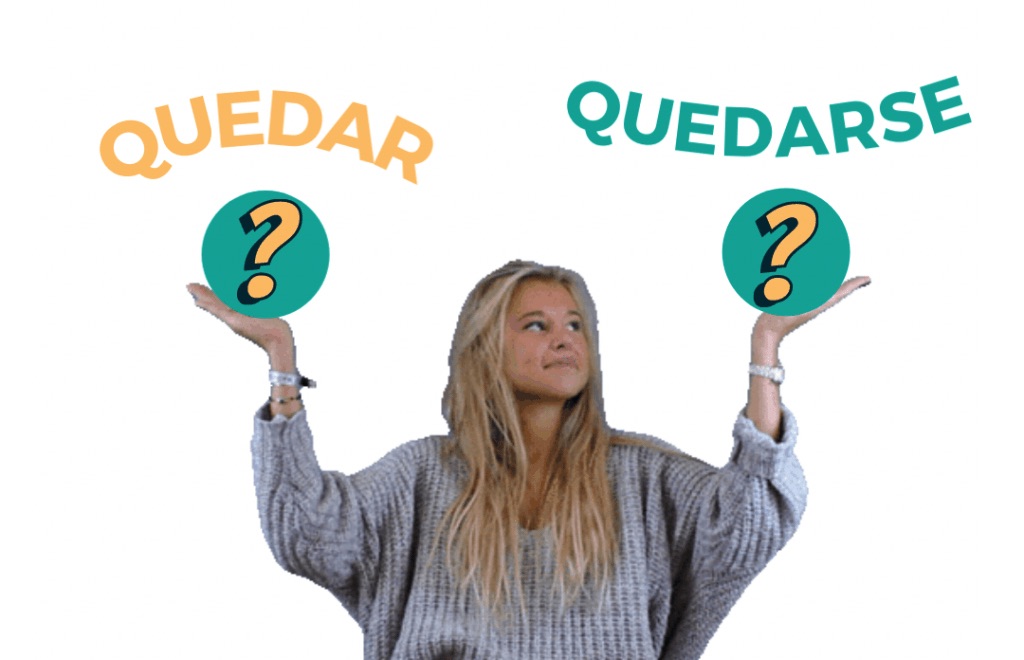
Quedar in Spanish: 6 Meanings and How to Use Them
Quedar or quedarse? Learn the six main uses of this essential Spanish verb, from making plans to saying how clothes suit you, with clear examples.


When we learn another language, writing is usually the skill we put off. It can feel like hard work, maybe because writing is hard in our own language too. Speaking feels more natural, and most of our writing is short messages and emails. But better writing helps you organise everything you know in Spanish, and you’ll need it for exams like the DELE or for a detailed email without fear. Here’s how to make it part of your routine.
Today we write quickly and constantly, which gives you lots of chances for small exercises every day or every week.

Correction is a delicate subject. Nobody enjoys being told they’ve made a mistake, and many students associate corrections with the red pen of traditional teaching. But mistakes are good: spotting them shows you understand the language.
In class, one of our favourite activities is correction teams. After writing a text, students work in pairs, each pair focusing on one area, such as verbs, accents and prepositions, coherence, or vocabulary. The texts go round every pair, with comments on coloured sticky notes instead of red pen, and then the whole class reviews the corrections together with the teacher. Bit by bit, corrections become normal, not scary.

AI can help too: try asking for several possible corrections of your text and comparing them, as we explain in learning Spanish with ChatGPT. And to check your spelling and word choice, see our guide to the best Spanish dictionaries and translators.
With these tips your written Spanish will improve. For more guided practice, take our one-to-one classes, or start with our free level test. We look forward to hearing from you.
Quedar or quedarse? Learn the six main uses of this essential Spanish verb, from making plans to saying how clothes suit you, with clear examples.

Enjoying Madrid doesn’t have to cost a euro. The best free things to do: parks, sunsets, free museum hours at the Prado and Reina Sofía, and neighbourhoods to explore.

Is learning Spanish your New Year’s resolution? Five questions and practical tips to set a realistic goal, make a plan and keep going past February.