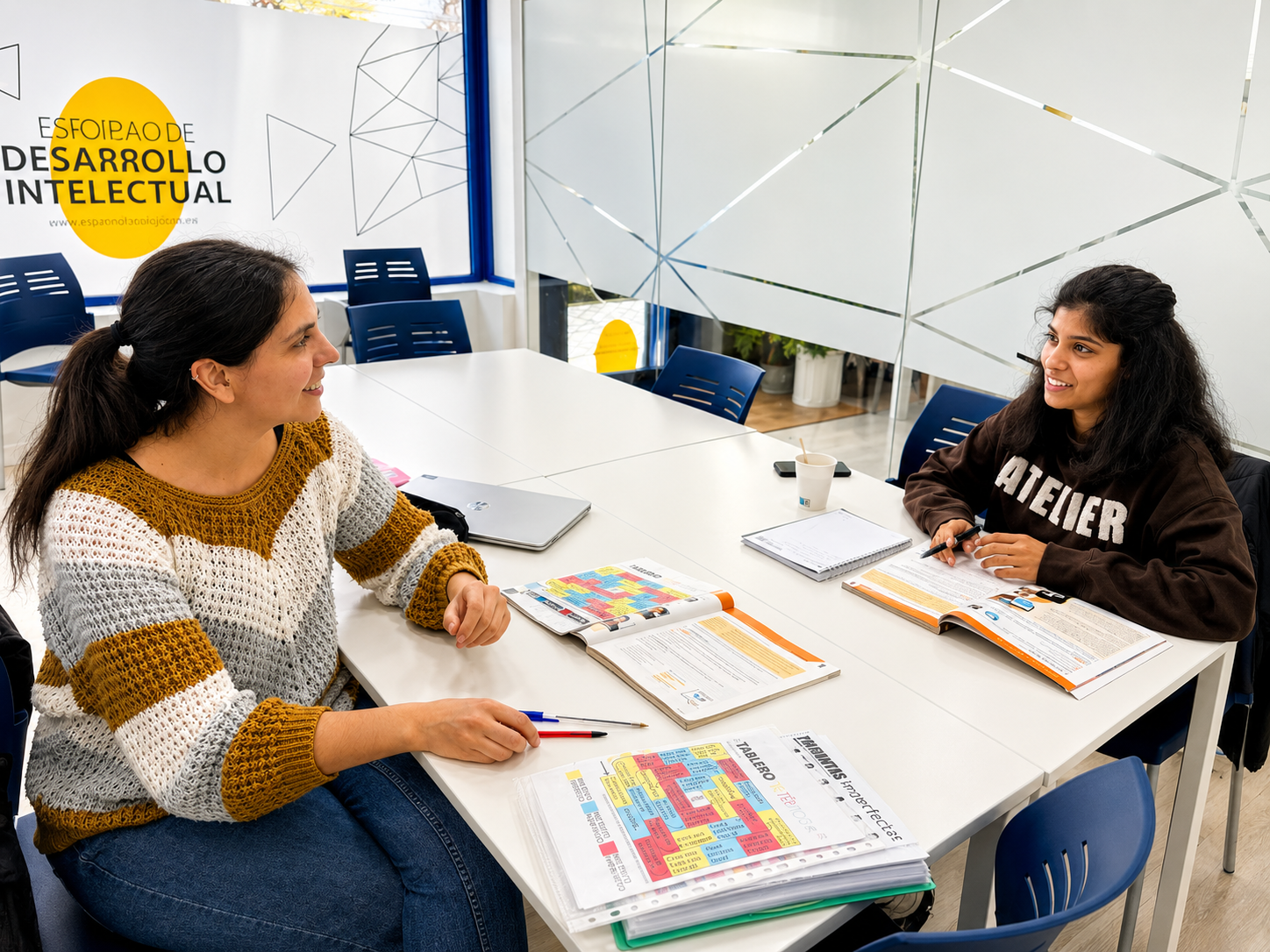
DELE Exam Dates 2027: Calendar and Registration Deadlines
Official 2027 DELE exam dates and registration deadlines from the Instituto Cervantes, which levels are in each session and how to choose yours.


On the road to fluency we all try to go a bit faster, and sometimes we forget that a word doesn’t exist, means something else or doesn’t work the way we think. Spanish speakers do it in English too: we can’t stop saying “people is” instead of “people are”. Here are the made-up words and mistakes our teachers hear most in class, and what to say instead.

Several of these come down to ser and estar: our guide to ser vs estar explains the difference. And for words that look the same but mean something else, read our guide to Spanish false friends.
Mistakes are part of learning, and a good teacher helps you spot them and move on. If you want help, try one of our conversation classes, and start with our free level test.
Official 2027 DELE exam dates and registration deadlines from the Instituto Cervantes, which levels are in each session and how to choose yours.

Our teachers’ favourite Spanish series and films to learn Spanish, from La casa de papel to Cuéntame cómo pasó, plus tips to learn while you watch.

Jaleo, algarabía, ojalá, aceite and almohada: five Spanish words with Arabic roots, including the one that gave our school its name.