The month of May is a special time for anyone living in Madrid. It’s when we celebrate both the Festival of the Community of Madrid and San Isidro, the patron saint of the city. At Jaleo Madrid, we carry the name of our beloved city in our identity — and we love taking part in all the festivities that make Madrid unique.
Now, if there’s an iconic animal in Madrid — and yes, we say this with all respect to the bear from the famous statue in Puerta del Sol — it’s the cat (“el gato”). And as many of our students know, we love cats at Jaleo. So, this month, we’re celebrating by exploring the many surprising meanings and uses of the word “gato” in Spanish.
1. The classic meaning: the animal
This one’s easy. A gato is, of course, a carnivorous mammal from the feline family.
Example:
En casa tengo tres gatos y están todo el día durmiendo.
(At home I have three cats and they spend all day sleeping.)
2. A true Madrileño
In Madrid, the word gato also refers to a person born in Madrid, whose parents are also from Madrid. This is a term of pride for many locals — being “a cat” is like being a true native of the city.
Where does this meaning come from? Some say it originates from the May 2nd uprising of 1808, when Madrileños were said to have climbed across the rooftops with ease. Others trace it even further back, to the 11th century.
3. A car jack
Yes, really. In Spanish, a gato is also the name of the tool used to lift a car when you need to change a tire.
Example:
Siempre hay que llevar un gato en el coche por si tenemos que levantarlo para cambiarle la rueda.
(You should always carry a jack in the car in case you need to lift it to change the wheel.)
4. “Cuatro gatos”: just a few people
The expression “cuatro gatos” literally means “four cats,” but it’s used to describe a very small group of people — usually when you expected more to show up.
Example:
Canta fatal y por eso a sus conciertos sólo van cuatro gatos.
(She sings terribly, which is why only a few people go to her concerts.)
5. “Dar gato por liebre”: to deceive
Last but not least, the idiom “dar gato por liebre” (to give a cat instead of a hare) means to trick someone — giving them something of poor quality when they expected something much better.
Example:
Se compró un coche de segunda mano y siempre está roto. Le dieron gato por liebre.
(He bought a second-hand car and it’s always broken. They tricked him.)
We don’t give cat for hare – we give #SpanishForLife!
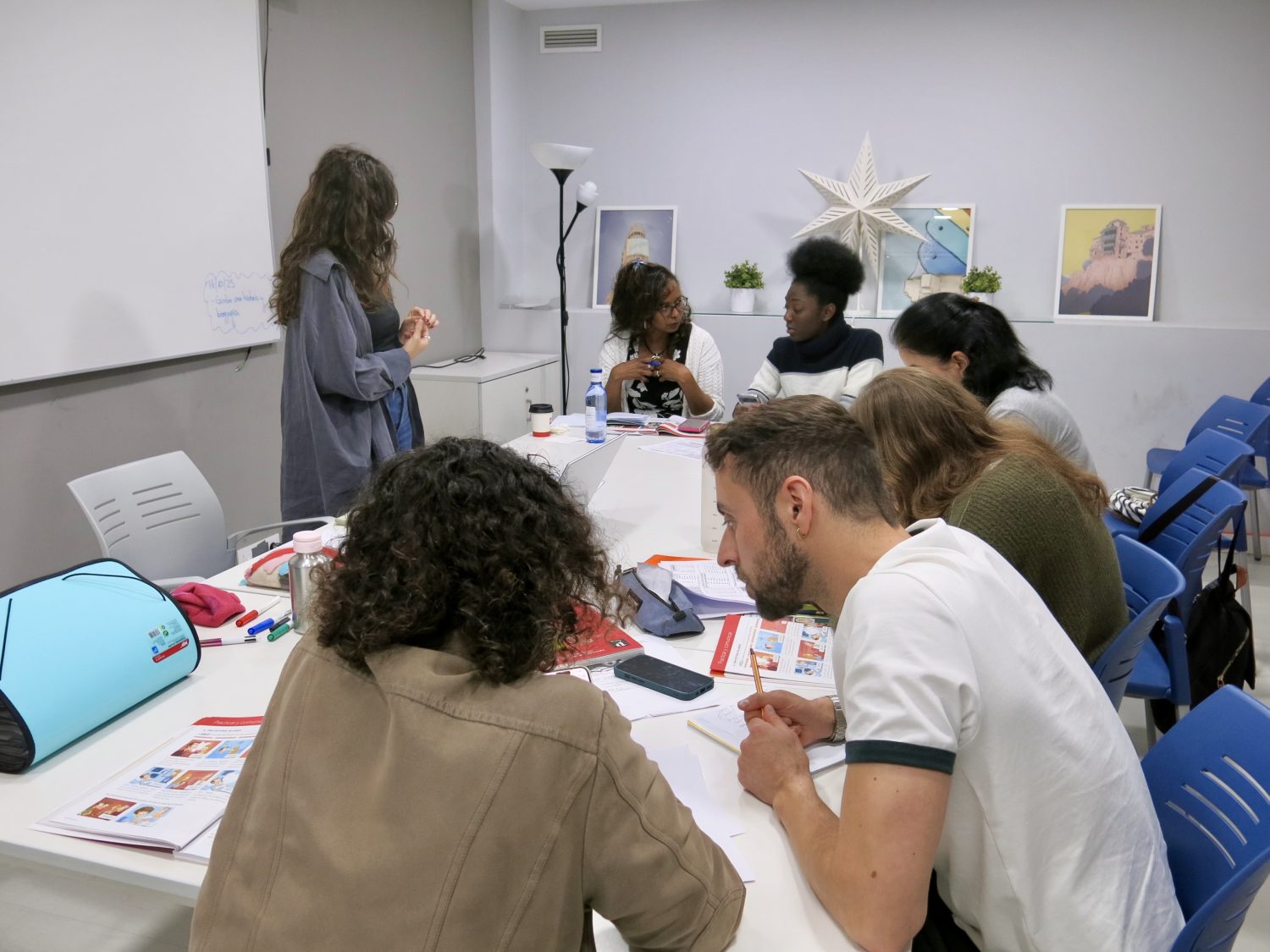
At Jaleo Madrid, we believe in honesty, good teaching, and fun learning. That’s why we’re not going to “dar gato por liebre” — we invite you to try our classes today. So you can see how we teach and get a taste of our lively atmosphere.
Ready to learn Spanish in the heart of Madrid — like a true “gato”?
Come celebrate May with us. We’ll be waiting!