Spain’s high-speed rail network makes exploring the country from Madrid remarkably efficient and accessible. Whether seeking historical landmarks, coastal views, or regional gastronomy, several of Spain’s most iconic destinations can easily be visited in a single day. This guide covers some of the best and most convenient day trips from the capital, complete with travel times and key highlights.
Quick Summary: Madrid Day Trips at a Glance
Destination
Travel Time (One Way)
Best For
Top Attractions
Toledo
25 mins (Train) / 1 hour (Bus)
History, Medieval Architecture
Primada Cathedral, Santa María Synagogue
Valencia
1.5 hours (High-Speed Train)
Beaches, Seafood, Coastal Vibe
Malvarrosa Beach, Authentic Paella
Córdoba
2 hours (High-Speed Train)
Moorish Architecture, Diverse Culture
Great Mosque-Cathedral, Jewish Quarter
Barcelona
2.5 – 3 hours (High-Speed Train)
Weekend Trip (Too big for one day!)
Sagrada Família, Park Güell
1. Toledo: A Journey Back to the Middle Ages
Toledo is a breathtaking city with a rich history stretching far back before the Medieval Era. Known as the “City of the Three Cultures,” it features remarkable historical sites representing Judaism, Christianity, and Islam: the ruins of an ancient mosque, the majestic Primada Cathedral, and the historic Synagogue of Santa María la Blanca.
The city is characterized by its winding, cobblestone streets. Walking through its historic center allows visitors to easily see most major landmarks within a single day. As Spain’s former capital, it remains an essential stop for history enthusiasts.
How to Get to Toledo from Madrid:
By High-Speed Train (AVE): Trains depart nearly every hour from Atocha Station. The journey takes approximately 25 minutes. Tickets can be purchased via Renfe or other transit platforms.
By Bus (ALSA): Buses leave hourly from the Plaza Elíptica transport hub. The trip takes around 1 hour. While it takes longer than the train, round-trip tickets are significantly more budget-friendly.
By Guided Tour: Numerous tour operators offer private coach travel, providing a hassle-free alternative for day trips.
2. Valencia: The Perfect Beach and Paella Escape
For those looking to escape the summer heat in Madrid, Valencia offers a quick coastal getaway. The city’s main urban beach, Playa de la Malvarrosa, is easily accessible via a short bus ride from the city center.
A trip to Valencia is incomplete without sampling authentic paella in its region of origin. Beyond the coast, the historic city center houses notable sights such as the Central Market (Mercado Central) and Valencia Cathedral. High-speed rail connects Madrid to Valencia in just 90 minutes.
Travel Tips for Valencia:
Departure: High-speed trains bound for Valencia depart from Chamartín Station in northern Madrid.
Booking: Advance reservations are strongly recommended, as train tickets to this popular destination frequently sell out during peak travel periods.
3. Córdoba: A Masterpiece of Islamic Art and Architecture
Located in Andalusia, Córdoba features a unique architectural landscape shaped by its past as part of Al-Andalus.
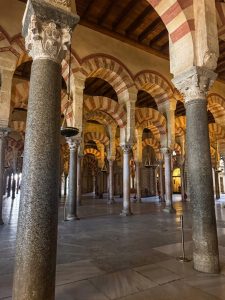
The city is globally renowned for the Great Mosque-Cathedral, a landmark where Islamic design and Christian church architecture seamlessly coexist. Additional highlights include the Casa Sefarad (a museum dedicated to Sephardic Jewish history), the historic Jewish Quarter, and the Casa Andalusí, known for its Roman and Moorish artifacts and traditional inner courtyards.
Travel Tips for Córdoba:
Inside the Great Mosque-Cathedral of Córdoba, famous for its forest of marble columns and double-tiered red-and-white horseshoe arches.
The Journey: High-speed trains run from Madrid to Córdoba in approximately 2 hours each way. While a four-hour round trip requires careful timing, it remains entirely doable for a full-day itinerary.
Reservations: Both train tickets and monument admission passes should be booked well in advance due to high demand.
Bonus: Can You Do a Barcelona Day Trip?
While high-speed rail connections take roughly 2.5 to 3 hours each way, Barcelona’s scale makes a single-day excursion quite demanding.
It is generally better suited as a weekend destination. Allocating a few days allows ample time to visit major landmarks such as La Sagrada Família, Park Güell, Las Ramblas, the Gothic Quarter, and the city’s beaches without rushing.
Final Thoughts
Other highly accessible single-day destinations from Madrid include historic cities such as Segovia, Ávila, San Lorenzo de El Escorial, and Salamanca, all of which offer strong transport links and rich cultural heritage.
Cuando tuvimos la loca idea de abrir nuestra propia escuela de español hubo varios puntos sobre los que discutimos. Si íbamos a usar un libro o no, cuántos estudiantes íbamos a tener en clase, e incluso conservamos una lista interminable de posibles nombres para nuestra escuela. Sin embargo, teníamos una cosa clara: teníamos que cambiar el método. Todos los miembros de Jaleo Madrid han pisado alguna vez una escuela de idiomas y se han sentado en el lugar del alumno. De hecho, entre los puntos que tenemos en común está haber sido estudiante de idiomas en otro país, haber vivido y trabajado en un lugar diferente a España, y estudiar una y otra vez cómo mejorar nuestras clases. Todos tenemos recuerdos similares de esas situaciones, a pesar de que hablamos