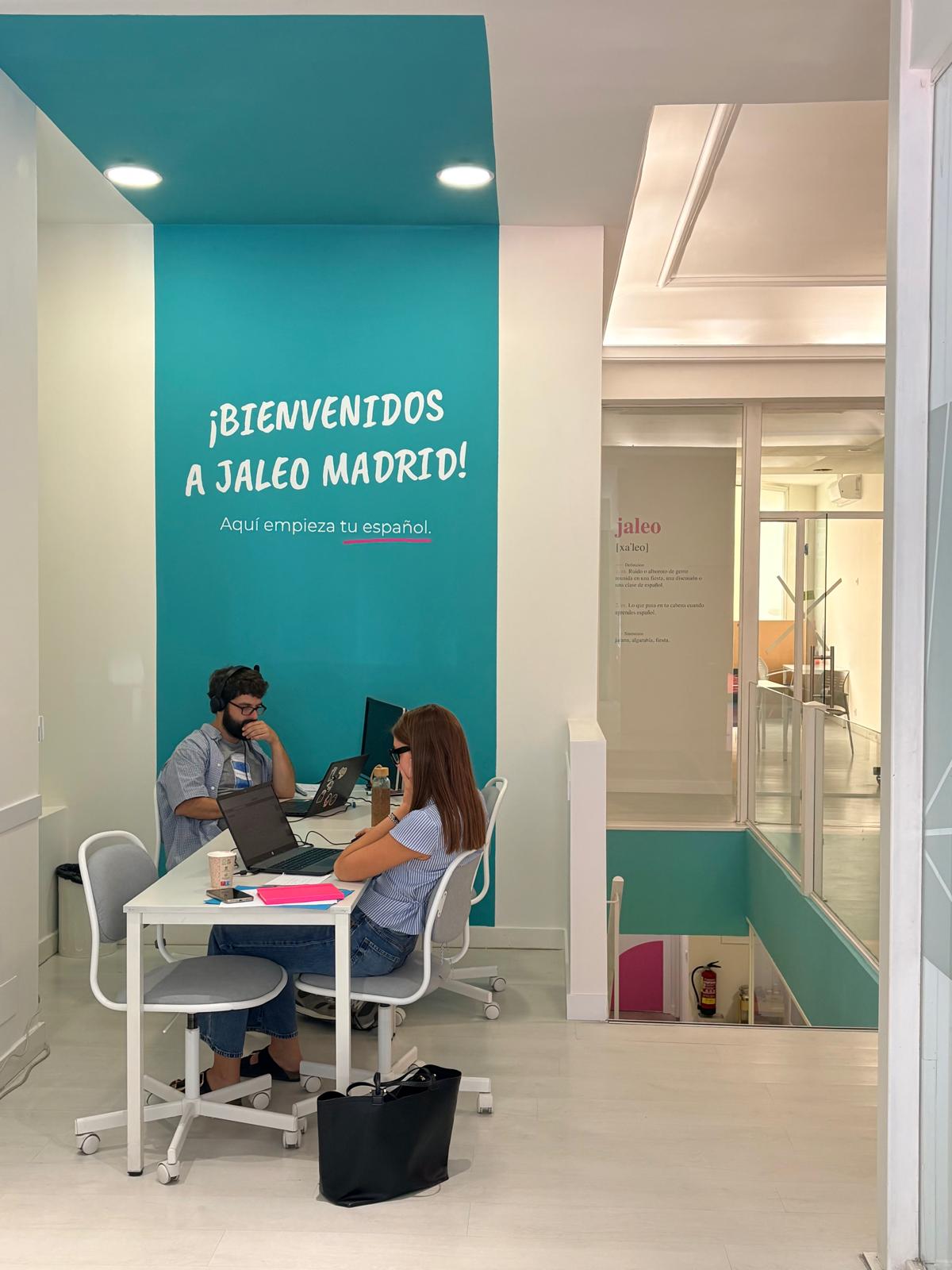
Erasmus+ Internship in Madrid at a Spanish School
Looking for an Erasmus+ internship in Madrid? Gain real marketing and admin experience while improving your Spanish at Jaleo Madrid.


One of the best moments when learning a language is finding a word that looks just like one in your own language. But many words look or sound almost the same in two languages and mean something completely different. These are “false friends” (falsos amigos), a term that comes from French. Here are the ones our teachers hear most in class, starting with English.
At Jaleo Madrid we teach many students from the United States, especially in summer, and every year we hear the same false friends. Students of other nationalities who speak English make them too, and so do Spanish speakers in English.

No language is safe. Here are some favourites from our multilingual classes.
English speakers have a few more traps up their sleeve: see the made-up words and common mistakes we hear in class. And for words Spanish and other languages truly share, read about Spanish words used in other languages.
If you want to work on these false friends, we’d be happy to help. Our conversation classes are a great place to practise, or nous contacter to arrange a class. We look forward to meeting you!
Looking for an Erasmus+ internship in Madrid? Gain real marketing and admin experience while improving your Spanish at Jaleo Madrid.

Sacar means “to take out”, but in these five everyday expressions it means much more. Learn what they mean and how to use them, with examples.

Looking for work in Madrid? Practical tips for foreigners: what to expect from contracts and salaries, how to search and why learning Spanish matters.