In a previous post, we talked about Spanish words that come from other languages spoken in the Iberian Peninsula. Today, we’re continuing that journey — but this time, we’re heading across the Atlantic to the Americas, where the majority of Spanish speakers live today.
Over the centuries, Spanish has absorbed many words from pre-Columbian languages, especially when it comes to food, music, and culture. Some of these words have even made their way into other languages like English, French, and Italian. Let’s explore a few of the most fascinating ones:
The bittersweet story behind “chocolate”
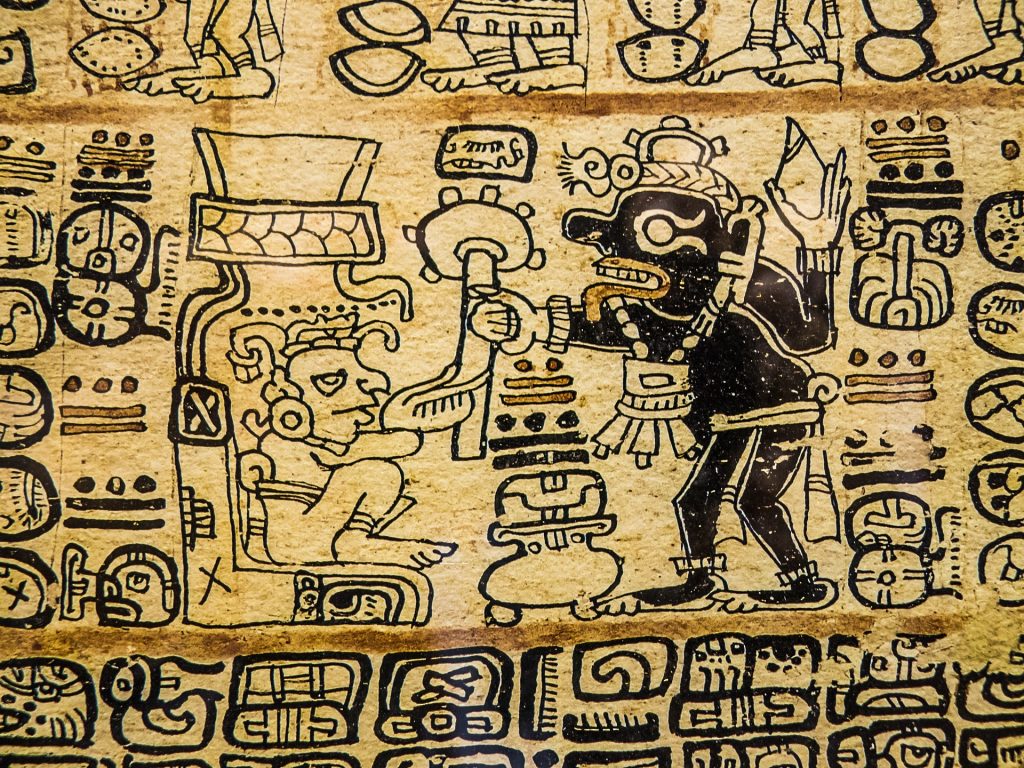
Even if you’re enjoying its sweet taste right now, the word chocolate actually means “bitter water.” It comes from Nahuatl, the language of the Mexica (Aztec) people. Originally, cacao was consumed as a bitter, frothy drink — very different from the delicious treat we know today.
Barbecue? Think Caribbean, not Texas
You might associate barbecues with the United States, but the word barbacoa has its roots in the Caribbean. The term comes from indigenous languages spoken in the region and originally referred to a kind of “scaffold inside an oven.” It’s easy to imagine how this evolved into the grill we use today.
How the Incas gave us the word “cancha”
From food, let’s jump to sports. The word cancha, used in Spanish to refer to sports courts or fields (like a basketball court), comes from Quechua, the language of the Inca civilization. In Quechua, “kancha” simply means an enclosed space or courtyard.
Maracas: a musical gift from the Guaraní people
Food? Check. Sports? Check. Let’s add music. The word maraca may sound Caribbean — and it’s certainly used widely in the region’s music — but its roots lie in the Guaraní language. In Guaraní, mbaraka means “gourd,” the material originally used to make the instrument. It all makes sense once you picture it.
What’s a petate, and why did we start storing things in it?
We wrap things up with the word petate, a term that now refers to a woven mat or even a place to store things. Originally, in Nahuatl, petatl referred to a straw mat used for sleeping. How it went from bed to storage is a bit of a mystery, but the word has stayed with us through the centuries.
Travel the Spanish-speaking world — without leaving Madrid
Although we’re based in Madrid, we love exploring the diverse roots of the Spanish language. Want to learn more about where Spanish comes from — and how it’s spoken around the world?
Come join one of our Spanish classes!
We’ll be waiting for you at Jaleo Madrid.